
Why Composting Still Feels Hard for Many Singaporeans Even When Climate Concern is High
Singaporeans are not short on concern about climate change. Awareness is widespread, worry levels are high, and many recognise that individuals play a role in addressing environmental issues. Yet when it comes to composting — a tangible, household-level climate action — hesitation remains.
Based on an online survey with 1,034 Happydotters, the data suggests that the challenge is not a lack of concern, but how composting is perceived.
Climate Concern Is Not the Barrier
The survey shows that climate concern is already high among Singaporeans. While 91.3% perceive climate change as a moderate to extreme threat, composting habits does not appear to be high.
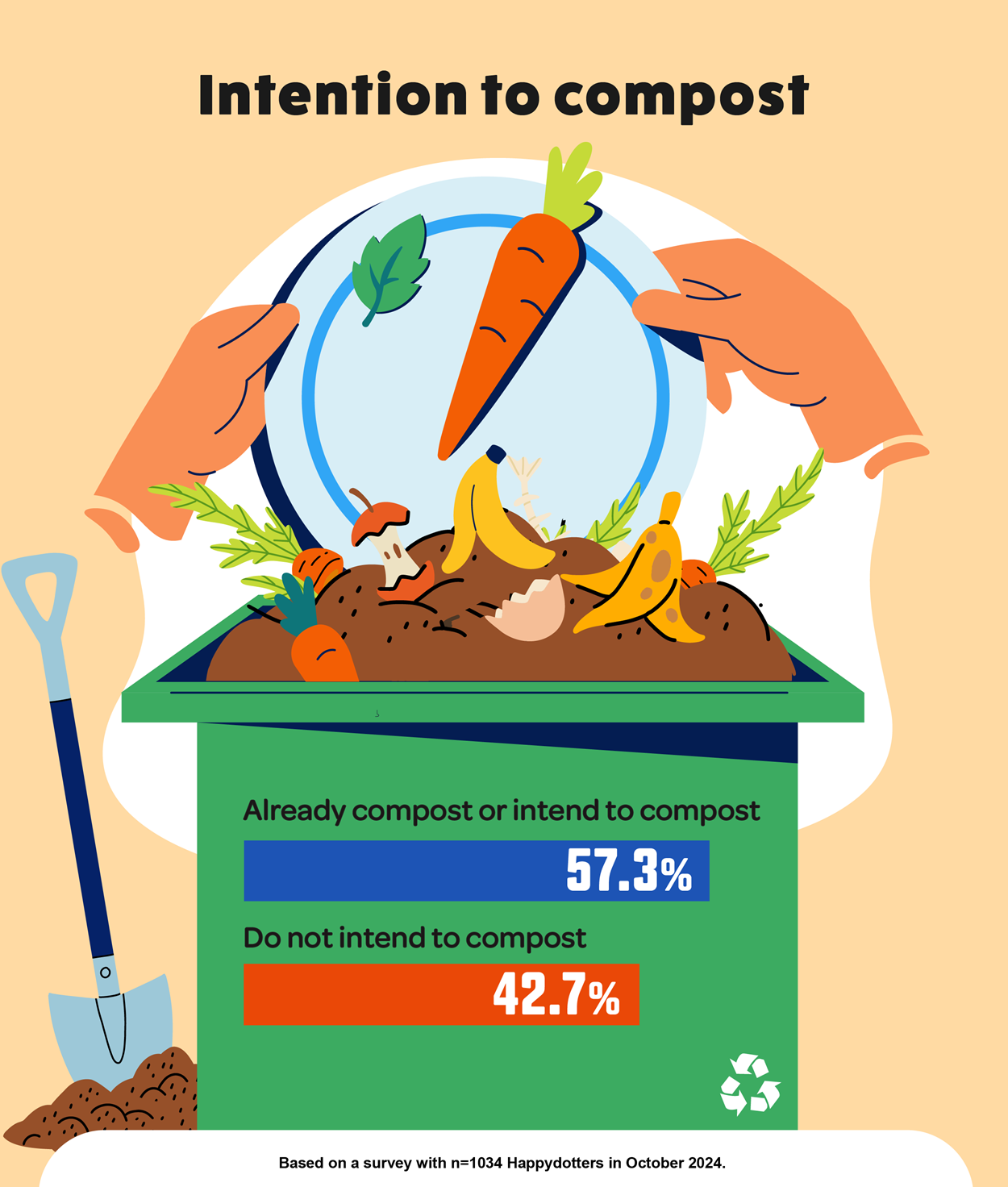
When asked about composting intentions, 57.3% of Happydotters indicate that they either already compost or intend to compost, while 42.7% say they do not intend to compost.
This split highlights that while more than half of Singaporeans are open to composting, a substantial minority remain unconvinced or unsure.
Perceptions Shape Willingness
Perceptions of composting play a significant role in shaping willingness. 68.6% of Happydotters agree or strongly agree that composting is beneficial for the environment, reinforcing that the environmental value of composting is widely recognised, although 28.9% of them neither agree nor disagree.
At the same time, views on difficulty are more mixed. A 46.8% of Happydotters agree that composting is difficult to do correctly, suggesting that perceived complexity may act as a barrier to adoption.
What This Means for Growing Composting Adoption
The findings suggest that encouraging composting in Singapore may require shifting toward how composting can be done easily and effectively in everyday life.
Clear guidance, simple systems, and realistic expectations may help reduce the perception that composting is difficult or error-prone, particularly in high-density living environments.
Moving Forward
Composting has the potential to be a practical entry point into climate action at home. The challenge lies not in convincing Singaporeans that climate change is real, but in helping them feel confident that composting is both achievable and worthwhile.
By addressing perceived difficulty and reinforcing personal impact, composting could become a more accessible and widely adopted habit across households in Singapore.
Share your views on ongoing social issues in Singapore through our surveys and check out fresh insights of What Singapore Thinks every month!